
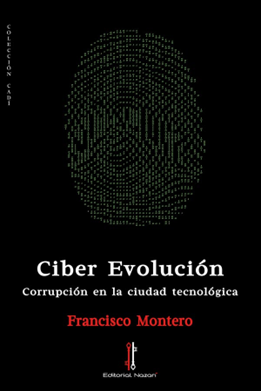
Cyber Evolution: Corruption in the Technological City
NOVEL
CYBER EVOLUTION: CORRUPTION IN THE TECHNOLOGICAL CITY
Description
In Cyber Evolution: Corruption in the Technological City, Francisco Montero proposes a reflection on the risks that the digital age poses to privacy and individual freedom. Set in a hyperconnected metropolis, the novel shows how technology, created to facilitate urban life, is transformed into a tool of mass control and manipulation. In this scenario, the centralization of information on a single digital platform turns personal data into a currency of power, favoring corruption and abuse by political and business elites.
Constant exposure on social networks, smart devices and algorithmic surveillance generate an environment where privacy is diluted and the promised transparency becomes institutional opacity. Through the conflict of the protagonist, a hacker and activist who fights to uncover a network of corruption, Montero poses a moral dilemma about the defense of digital rights and ethical responsibility in the face of the indiscriminate use of information.
The author turns his work into a warning about the danger of sacrificing privacy in the name of efficiency, inviting us to question the price of hyperconnectivity and to reflect on the limits of technological progress.
Synopsis
Ciberia is a futuristic city that symbolizes the culmination of technological development. In a hyperconnected environment, the lives of citizens are completely controlled through a computer application with social network functions, where every activity is monitored under the promise of efficiency and security. However, behind this façade of progress and modernity, political and economic interests marked by corruption and the improper use of personal data are hidden.
The mayor of Ciberia, a politician suspected of corruption, signs a lucrative contract with the country's leading tech company. Faced with the risk to his reputation, the company's president turns to a hacker and cyberspace activist to investigate the mayor. As he progresses in his investigation, he discovers illicit practices that link political power with the digital control of citizens. The protagonists will face threats, ethical dilemmas and dangers that put their own lives at stake, with the support of ROOT, a cybersyndicate that defends the rights of technological users.
The author combines suspense with an ethical reflection on the risks of technological dependence and the vulnerability of privacy in a society governed by algorithms. The novel raises an essential question: to what extent does digital convenience justify the loss of freedom and the total exposure of one's personal life in the technological age?
Best lines
"Metadata can be used to violate our privacy"
"In the homes of the people of Ciberia there are more and more home automation devices connected to the network that store information about our private life, our habits and preferences, susceptible to being spied on"
"Even if you're not doing anything wrong, you're being watched and recorded and then they can examine every decision you've made and attack you on that basis, to draw suspicion of an innocent life."
"All that is homo data: email messages, each and every one of the photos we share on the Internet, the geolocation of the places we have been or our trace on the websites we have visited"
Link to an excerpt from the novel for free distribution
This post is related to other materials published by the Innovation and Technology Division of the AEPD, such as: